Dubai Frame Architecture – Design Story, Construction, and Symbolism
Learn how the Dubai Frame was conceived and built: the international competition, the architect Fernando Donis, engineering challenges, and symbolic meaning.
The Dubai Frame is much more than a photogenic Instagram spot. It's a deliberate piece of urban storytelling – a monumental window between Old and New Dubai.
In this article, we'll unpack the history, design concept, and engineering that turned a simple rectangle into a skyline-defining landmark.
1. From competition to concept
The Dubai Frame began as part of an international design competition organized by ThyssenKrupp Elevator and the Dubai Municipality.
The winning idea
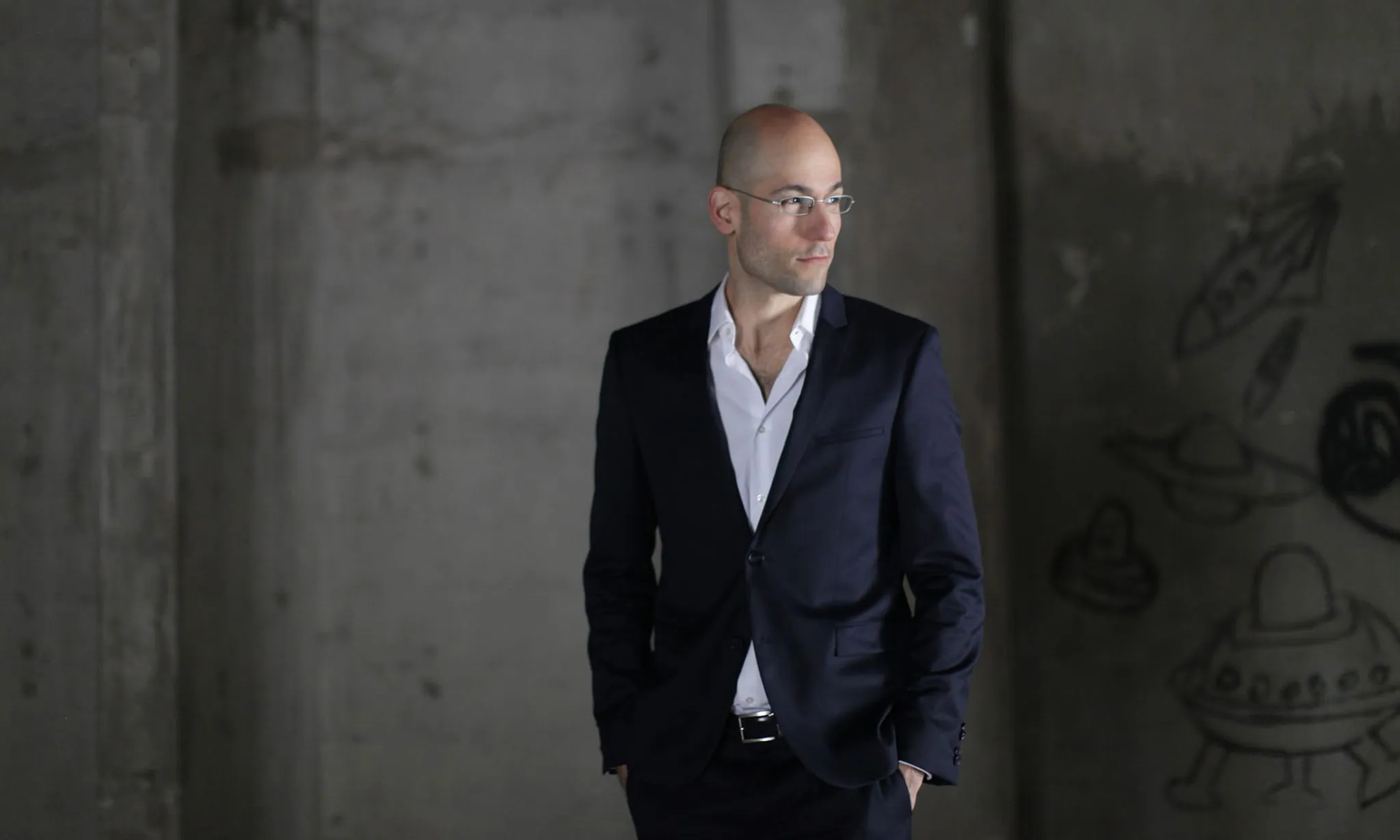
- Architect: Fernando Donis, a Mexican architect who previously worked on iconic Dubai projects.
- Concept: Instead of adding yet another tower, he proposed a frame that would highlight the skyline rather than compete with it.
- Goal: Create a visual link between Old Dubai (to the north) and New Dubai (to the south), using one simple geometric form.
✏️ Design note: Donis described the idea as "a void that frames the city" – architecture that is as much about what it surrounds as what it is.
2. Why a frame? Symbolism and urban meaning
Most cities build towers to stand out. The Dubai Frame instead acts as a lens.
Three layers of symbolism
- Time – On one side you see Old Dubai (creek, Deira, Karama); on the other, future‑leaning Downtown.
- Ambition – The frame captures Dubai's journey from modest port to global city in just a few decades.
- Perspective – The structure invites you to compare where the city came from with where it's going.
A frame in the park
- Location: Zabeel Park, a green space that sits between historic districts and the new central business areas.
- Effect: The Frame rises out of greenery, giving visitors a calm base before the dramatic views above.
3. Key architectural stats
| Element | Measurement |
|---|---|
| Height | ~150 m (492 ft) |
| Width | ~93 m (305 ft) |
| Elevators | 2 high-speed glass elevators in the legs |
| Top deck length | ~93 m |
| Main materials | Reinforced concrete, steel, glass, and aluminum cladding |
4. Golden cladding and mashrabiya pattern
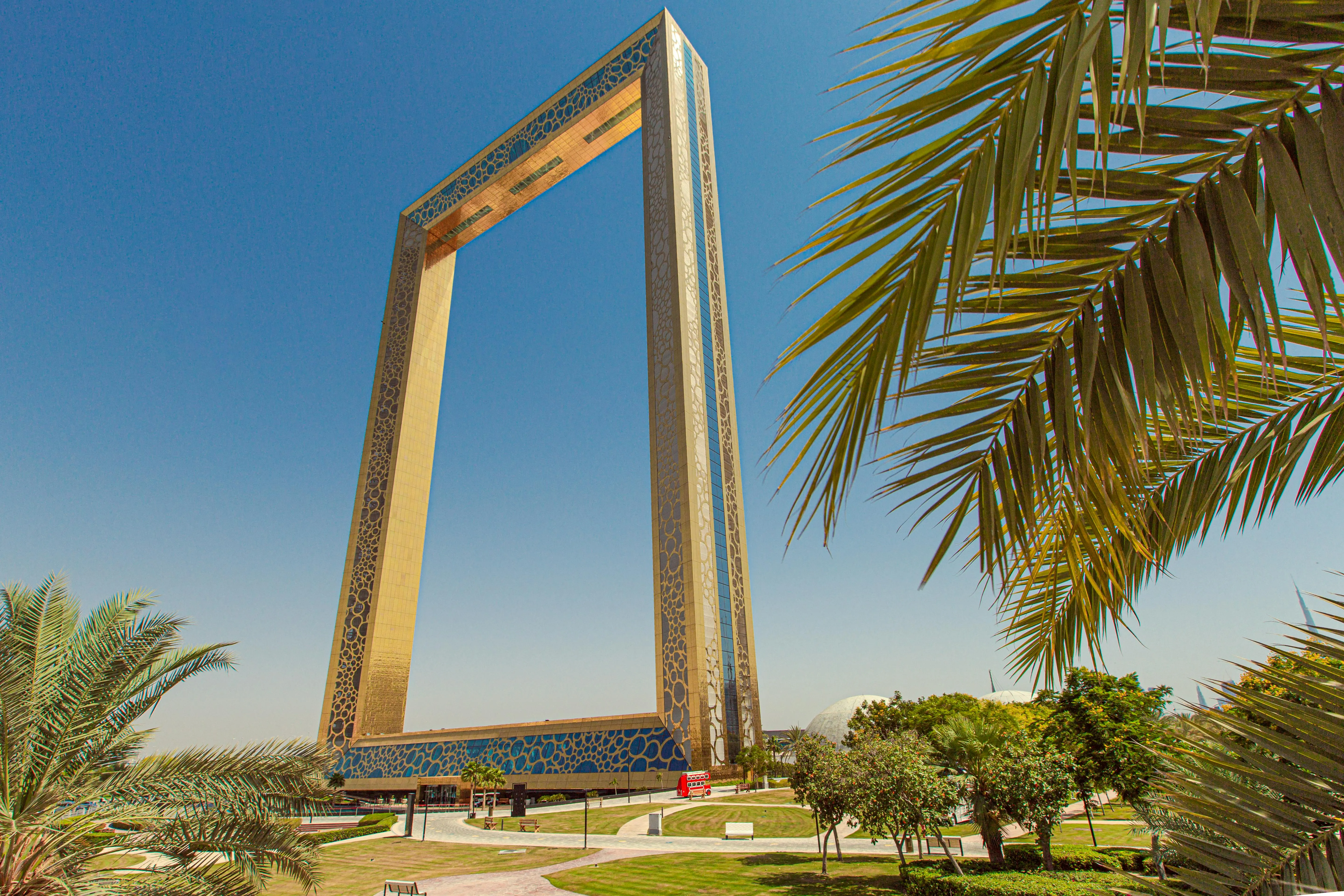
One of the first things you'll notice is the golden exterior.
Inspiration: Islamic geometry
The cladding is decorated with a stylized pattern inspired by mashrabiya – traditional Arabic latticework that filtered light and created privacy.
This pattern:
- Breaks the scale of the huge surfaces into human-readable detail.
- Casts ever‑changing shadows on the structure throughout the day.
- Gives the Frame a regional identity, tying contemporary design to Islamic art.
Materials & finish
- Aluminum panels with gold-colored stainless-steel coating.
- Designed to withstand harsh sun, heat, and occasional sandstorms.
- Regular cleaning keeps the facade shimmering against the blue sky.
5. Engineering challenges: building a giant rectangle
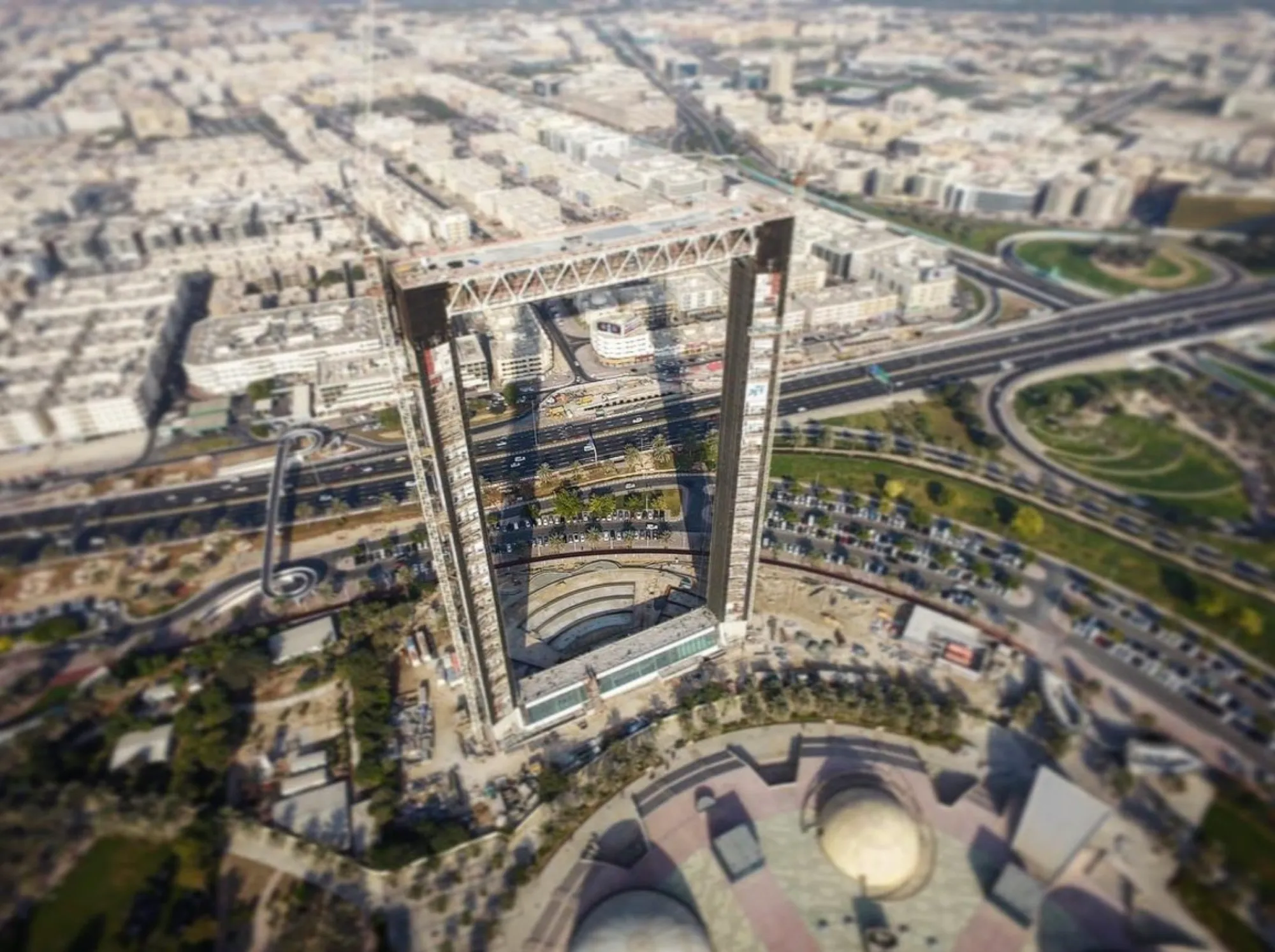
Building two 150 m legs connected by a 93 m horizontal deck at the top isn't simple.
Structural system
- The Frame uses reinforced concrete cores in the vertical legs.
- Steel trusses and beams form the top horizontal link.
- Engineers had to consider wind loads and thermal expansion in Dubai's climate.
Construction stages (simplified)
- Foundations and basements – to anchor the enormous load and host services.
- Vertical legs – cast and climbed in stages using formwork.
- Top deck – assembled and connected at height, with significant temporary support.
👷 Fun fact: Workers used large cranes and temporary platforms to assemble the top section, a bit like putting the "bridge" between two skyscrapers.
6. Inside the Frame: layout and visitor flow
From an architectural point of view, the Frame is also a carefully choreographed experience.
Ground level
- Ticketing, security, and access via Zabeel Park Gate 4.
- "Old Dubai" multimedia gallery in a curved, tunnel‑like space.
- Elevators at the base of each leg.
Vertical circulation
- Two glass elevators carry visitors up the legs.
- Travel time is roughly 75 seconds, with glimpses of the city through the glass panels.
Top deck
- 360° panoramic corridor with floor‑to‑ceiling glass on both sides.
- Central glass floor strip made from multiple laminated glass layers.
- Subtle lighting strips guide movement and highlight views.
Descent & future gallery
- A different pathway leads down, channeling visitors into the Future Dubai tunnel.
- The exit connects back to the park, gift shop, and facilities.
7. Dubai Frame in context: comparing landmarks
If you're an architecture fan, it's interesting to compare the Frame with other icons:
| Landmark | Type | Statement |
|---|---|---|
| Burj Khalifa | Megatall tower | Vertical ambition and engineering prowess |
| Museum of the Future | Sculptural museum | Innovation and fluid geometry |
| Dubai Frame | Urban frame | Perspective on past and future |
Rather than reaching for the sky, the Frame reaches for meaning: it's about what you see through it.
8. How to appreciate the design during your visit
Next time you're at the Dubai Frame, try this mini-architecture walk-through:
- From far away – Notice how the Frame aligns with the skyline; walk until you find a spot where it neatly boxes Burj Khalifa.
- At the base – Look up along the leg and feel how your eye is pulled to the sky.
- On the deck – Stand at each long side and compare the "frames" of Old vs New Dubai.
- In the tunnel – Notice how the futuristic visuals mirror the glass-and-steel language of the structure itself.
Understanding the architectural story adds a whole extra layer to your photos – you're not just capturing a view, you're capturing an idea about a city.
About the Author

Architecture & Design Writer
I put this guide together so your Dubai Frame visit feels easy, insightful, and celebratory — a good story and great views in one place.
Tags
Comments (0)
Loading comments...