Dubai Frame Engineering – Structure, Safety, and Glass Floor Explained
Explore the engineering behind the Dubai Frame: foundations, structural design, glass floor safety, materials, and how the frame handles Dubai's climate.
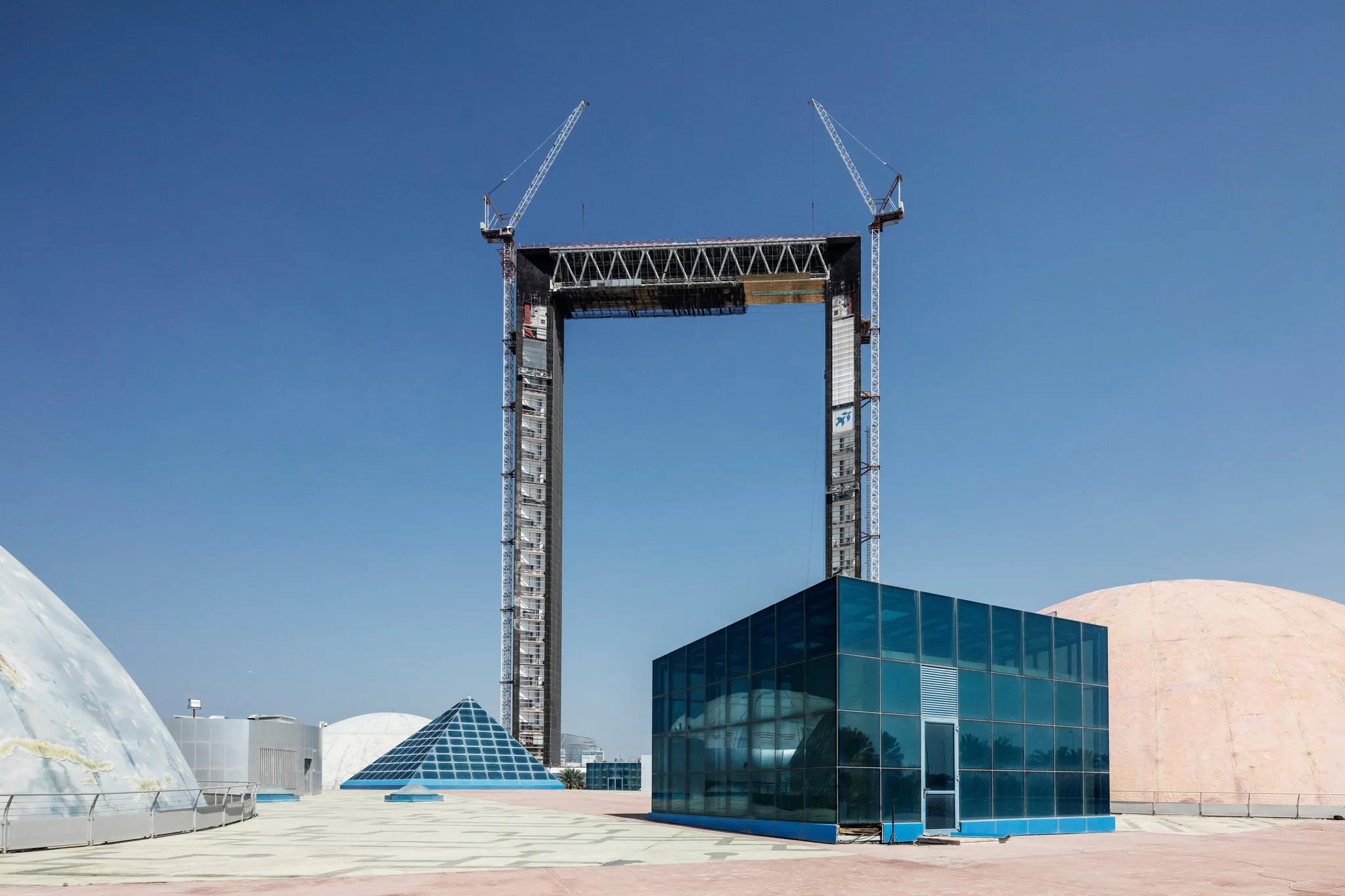
The Dubai Frame looks simple from a distance – just a giant golden rectangle. Up close, it's a complex piece of engineering handling wind, heat, and thousands of visitors a day.
Let's unpack how it works, without needing an engineering degree.
1. The basic structural idea
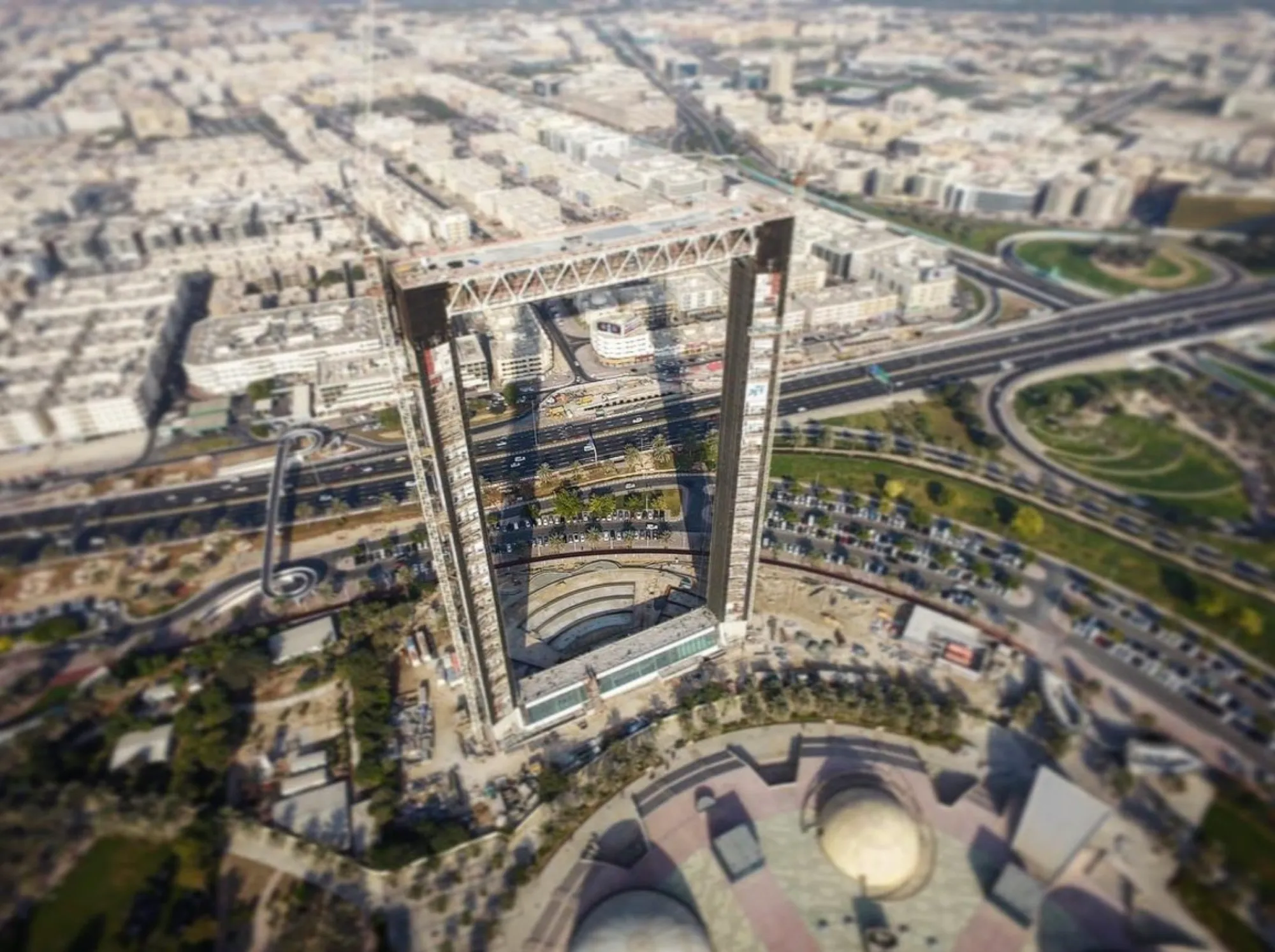
Think of the Frame as two vertical towers joined by a horizontal bridge.
Components
- Two legs (vertical): reinforced concrete cores with steel inside.
- Top deck (horizontal): steel trusses and beams forming the Sky Deck.
- Base: foundations and underground levels tying everything together.
This creates a rigid rectangular loop, helping the structure distribute loads.
2. Foundations: holding a giant picture frame
Dubai's soil in this area is a mix of sand and rock, which requires careful design.
Engineers use:
- Deep foundations (piles) to transfer the load to stable ground.
- A combination of reinforced concrete footings and underground supports.
Why it matters:
- The Frame isn't just heavy upwards; connecting the top creates bending forces at the base.
- Foundations must handle not only the weight but also wind loads and temperature changes.
3. How the top deck was built and connected
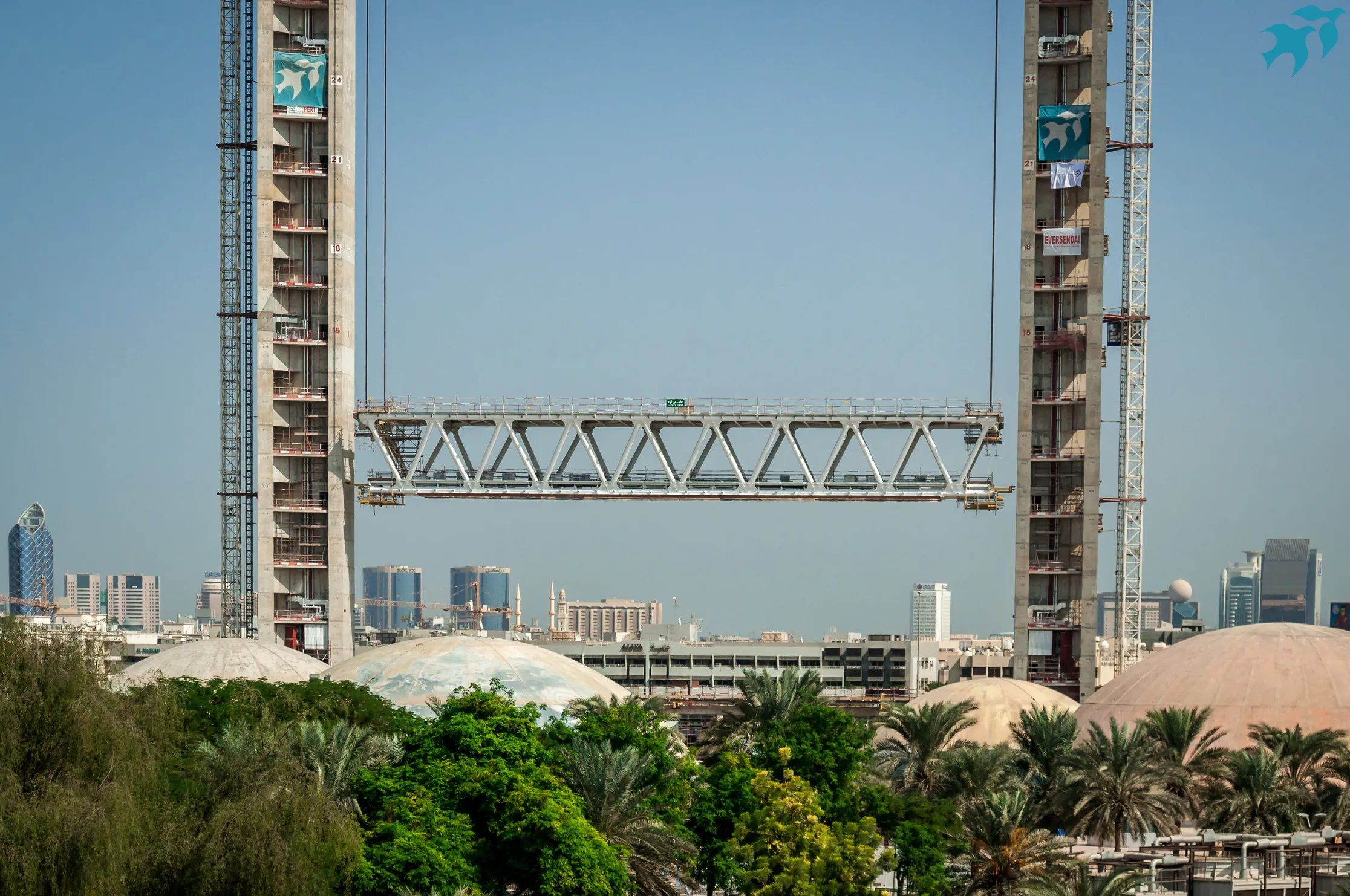
The 93 m top span is a major engineering challenge.
Likely construction sequence (simplified)
- Build the two legs up to near full height.
- Assemble sections of the top deck using steel trusses and beams.
- Use cranes and temporary supports to lift and connect the deck to each leg.
The result is a strong, continuous structure able to resist bending and twisting.
4. Dealing with wind and movement
At ~150 meters tall, the Dubai Frame must handle strong winds, especially during storms.
Engineers consider:
- Wind tunnel testing or simulation to understand forces on the frame.
- Adding structural elements that stiffen the frame where needed.
- Ensuring the top deck can flex within safe, comfortable limits.
🏗️ All tall structures move slightly. The key is designing this movement so it's safe and barely noticeable to visitors.
5. The glass floor: strength behind the "fear"
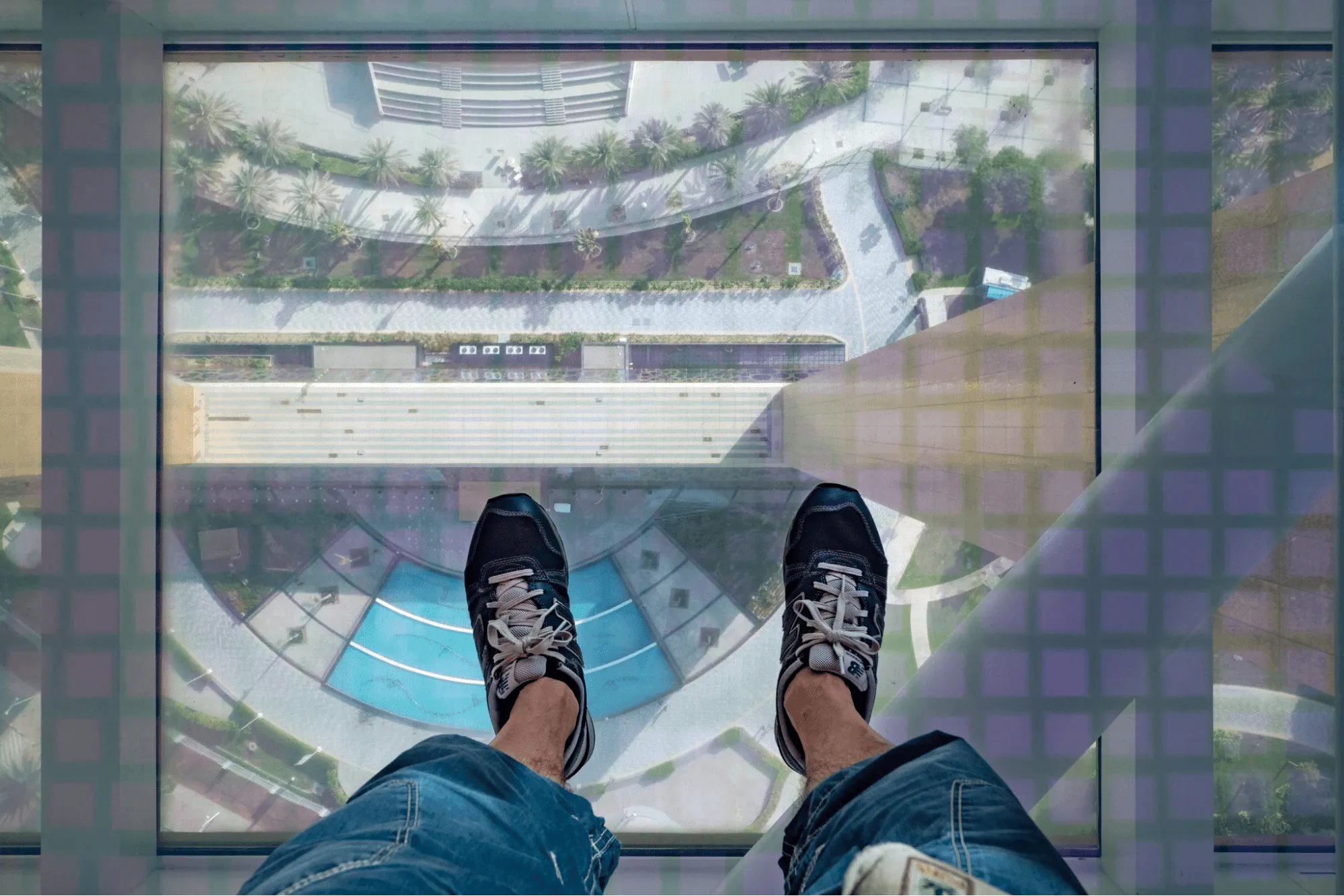
The glass floor on the Sky Deck is often the scariest-looking part – but it's engineered to be one of the strongest.
Typical features of such glass floors
- Multiple layers of tempered and laminated glass.
- A support grid beneath that distributes weight.
- Safety factors far above typical visitor loads.
In practice, this means:
- It can hold far more weight than it will ever experience from visitors.
- If one layer were ever chipped, other layers would still maintain integrity until repaired.
- Regular inspections ensure ongoing safety.
When you step onto it, your brain may shout "nope", but the **math and materials say yes".
6. Cladding, climate, and maintenance
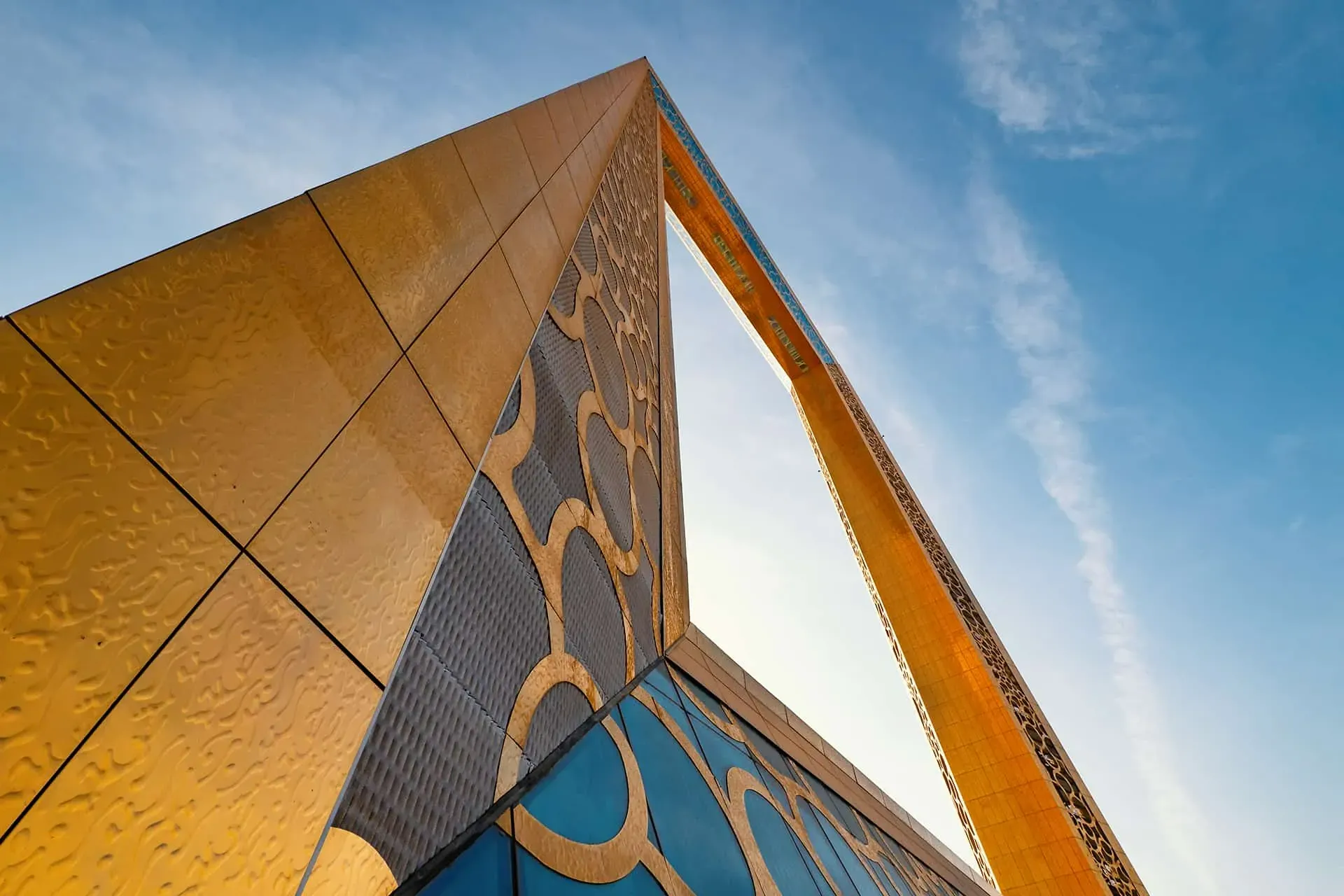
Dubai's climate is hot, sunny, and sometimes sandy.
Cladding
- The Frame is wrapped in aluminum and stainless-steel panels with a golden finish.
- The pattern is inspired by Islamic mashrabiya designs.
Climate challenges
- High UV exposure from strong sun.
- Temperature swings between day and night.
- Occasional sandstorms.
Engineers and maintenance teams respond by:
- Choosing coatings that resist fading and corrosion.
- Planning regular cleaning to keep the golden shine.
- Inspecting joints and cladding attachments for long-term safety.
7. Handling crowds safely
On busy days, thousands of people may pass through the Frame.
Systems in place typically include:
- Timed entry slots to spread visitors across the day.
- Capacity limits for elevators and the Sky Deck.
- Security staff and CCTV monitoring.
From an engineering standpoint, structures are designed for far higher loads than standard operations – often planning for emergency scenarios as well.
8. Why understanding the engineering makes your visit better
Next time you visit the Dubai Frame, consider:
- Looking at the leg corners and imagining the hidden concrete and steel.
- Peeking at the glass thickness and support grid beneath the floor.
- Watching how the pattern of light changes over the golden cladding.
Knowing what holds it all up doesn't make it less magical – it makes the experience even more impressive.
You're not just stepping into a tourist attraction. You're walking through a huge open-air engineering diagram – one that just happens to have world-class views inside.
About the Author

Engineering Explainer
I put this guide together so your Dubai Frame visit feels easy, insightful, and celebratory — a good story and great views in one place.
Tags
Comments (0)
Loading comments...